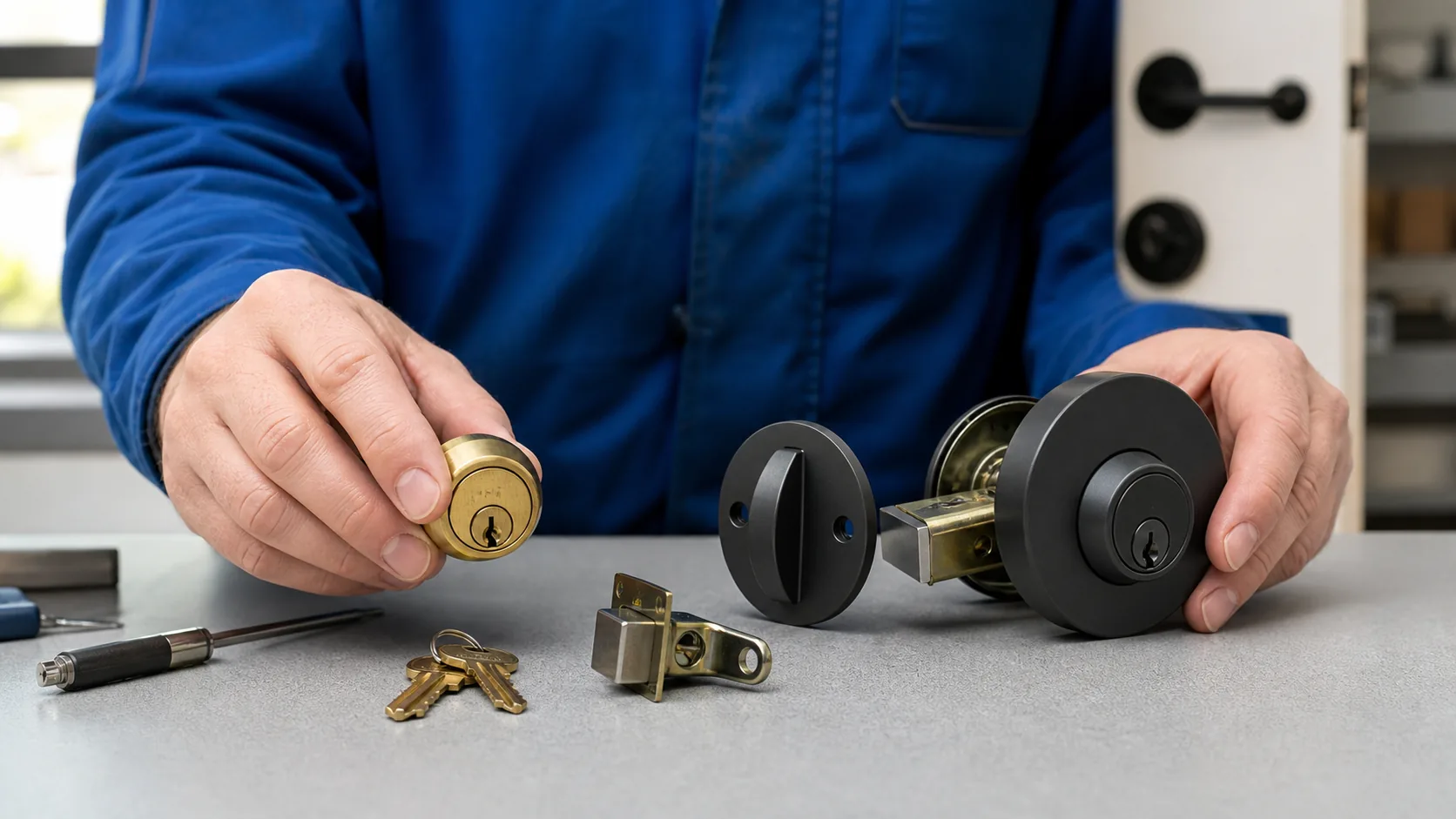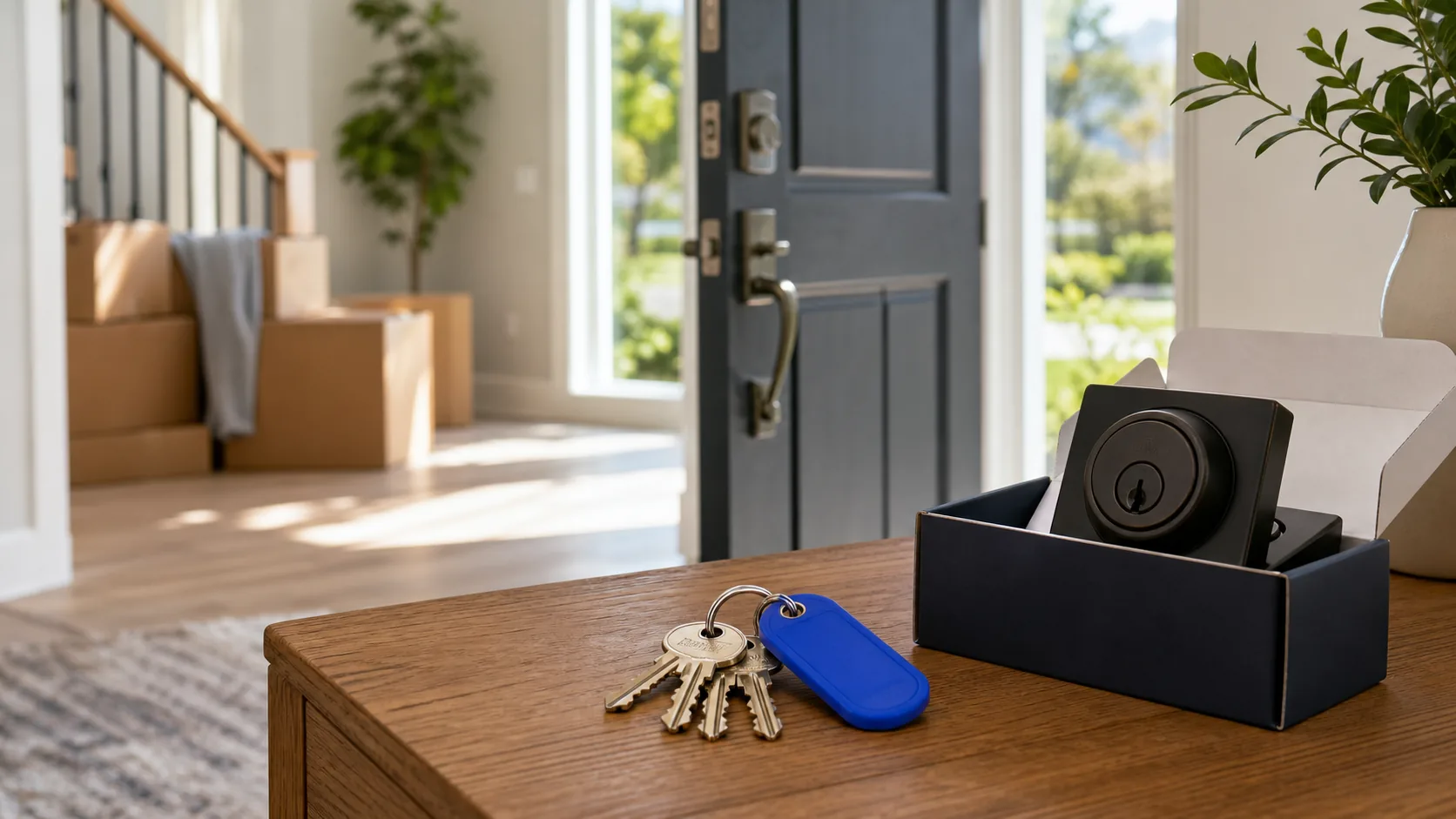
When you receive keys to a new home, you usually cannot know how many copies were made over the years or who still has one. Rekeying compatible exterior locks changes the working key while preserving hardware that is still in good condition. It is a focused way to reset access without automatically replacing every lock.
A good move-in plan includes more than the front door. Side and garage entries, gates, detached rooms, mailbox locks, smart-lock accounts, and building-managed openings may all use separate systems. Inventory first, then decide which keys should work where and which hardware actually needs repair or replacement.
Key takeaways
- Count cylinders and access points, not just doors or keys handed to you.
- Separate homeowner-controlled locks from association, landlord, or utility hardware.
- Choose a simple key plan before rekeying begins.
- Test alignment, latching, every new key, and any electronic access before handoff.
Inventory every authorized opening
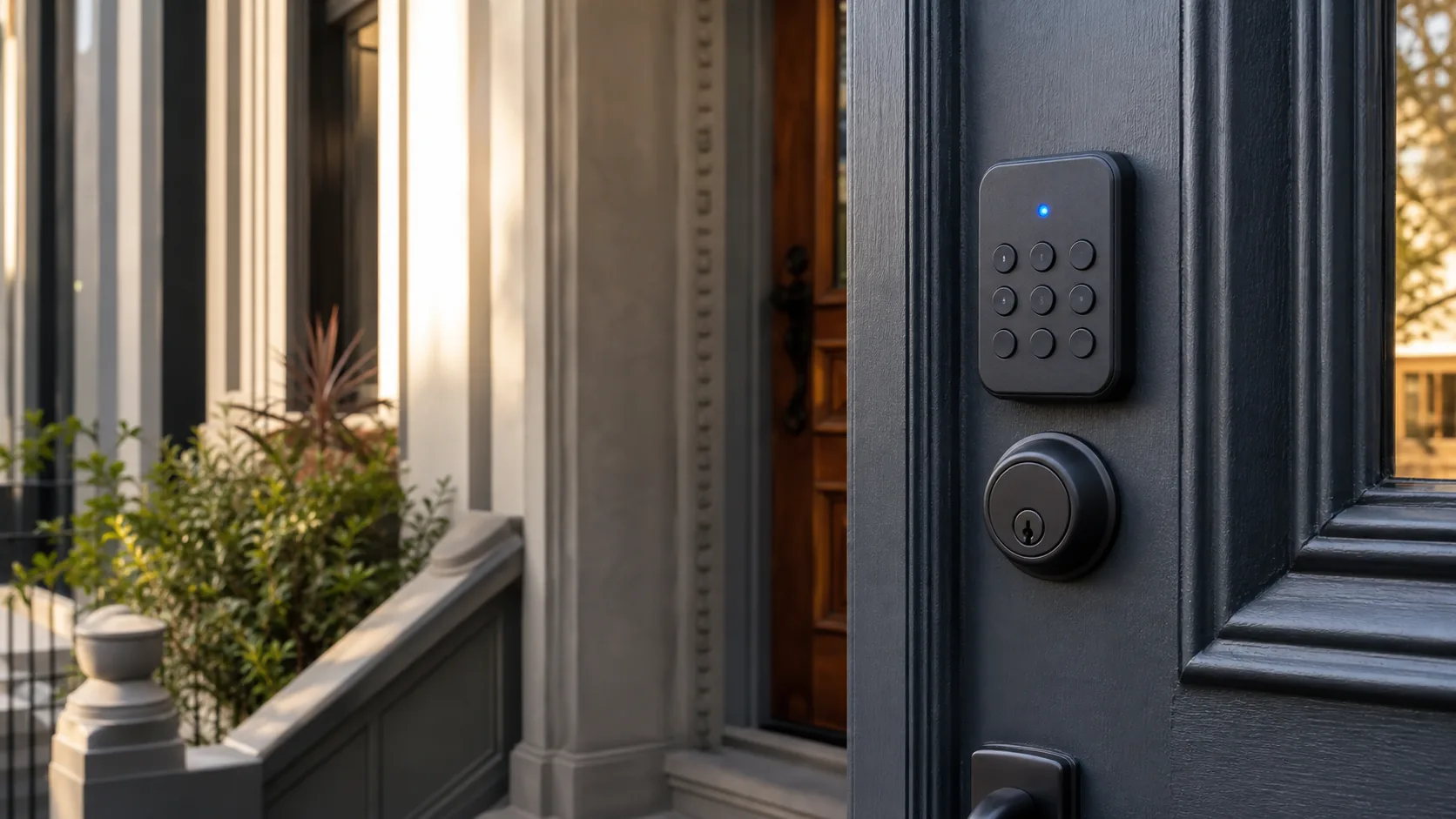
Walk the property in daylight and list the front, rear, side, garage, patio, basement, roof, gate, and detached-space entries that you are authorized to control. Count each key cylinder. A door with a keyed knob and keyed deadbolt has two cylinders, while a keypad lock may also have a mechanical backup cylinder.
Label the list by location and take clear photos of both sides of the hardware, the door edge, and the strike. Note which supplied keys operate each opening without forcing them. Do not experiment with keys in utility, fire, association, or shared-building locks that are not yours to change. Ask the responsible party how those access points are managed.
Check condition before choosing rekey or replacement
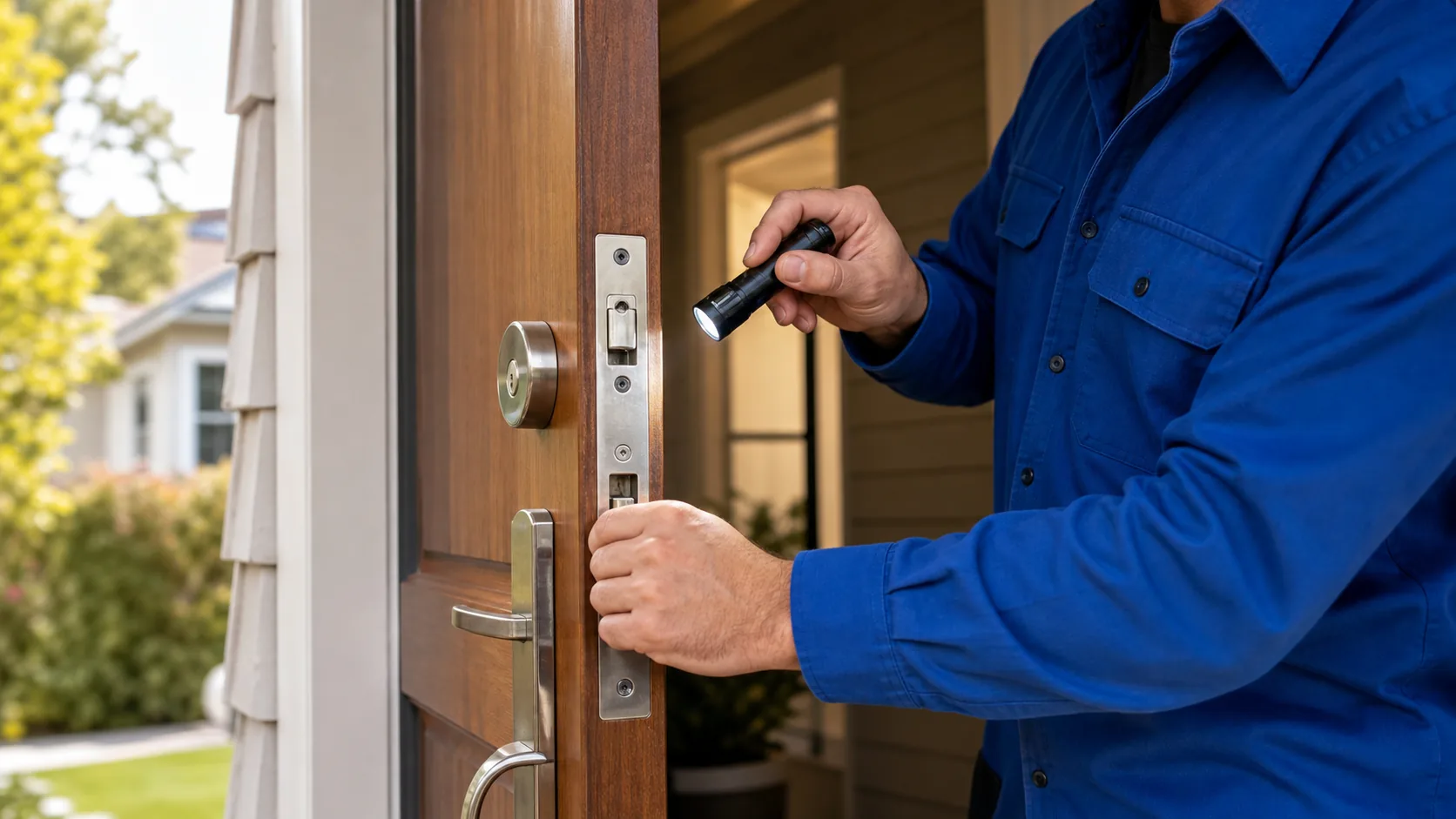
With the door open, test whether the latch and deadbolt move smoothly. Close it and repeat. If the bolt binds only when closed, the opening may need alignment. Look for loose trim, a spinning cylinder, missing fasteners, cracked parts, corrosion, or a key that sticks in both positions. Report doors that do not close or secure normally.
Sound, compatible hardware may only need rekeying. Worn, broken, poorly fitting, or incompatible locks may be better candidates for repair or replacement. Cosmetic preference and new features can also justify replacement, but the door preparation and frame still need to support the chosen hardware. Do not buy a full set based on appearance before measuring the openings.
Design a simple key plan
Decide whether compatible exterior doors should operate with one household key or remain in separate groups. A detached workspace, rental area, cleaner entrance, or storage room may need different access. List who receives each key and how spares will be stored. The locksmith can then confirm which cylinders and keyways can support the plan.
Avoid making more copies than you can account for. Do not mark keys with the full address. If contractors need temporary access during move-in, plan how keys will be returned or how an approved temporary smart-lock code will be removed. When a physical key goes missing, record which openings it affects rather than relying on memory.
- Opening and cylinder count
- Locks to key alike and locks to keep separate
- Number of household, trusted-contact, and managed spares
- Temporary access needed during move-in work
- Any missing old key or uncertain access history
Reset electronic and secondary access
Change owner-controlled garage remotes, gate transmitters, alarm credentials, keypad codes, and smart-lock users according to the official product or property process. Remove prior users, update recovery information, and enable stronger account protection when available. Confirm that you, rather than a seller, installer, or temporary contact, control each household device account.
Mailbox, lobby, elevator, parking, and shared gate access may be controlled by a postal service, association, or property manager. Follow the appropriate handoff instead of changing shared hardware. For a smart lock that still has a mechanical cylinder, ask whether that cylinder should be rekeyed so an old physical key does not remain valid.
Prepare for the rekey appointment
Send the inventory and photos in advance, explain the desired key groups, and identify any locks that are sticky or damaged. Confirm who can approve repairs or replacement if an incompatible cylinder is found. Keep proof of ownership or authorized access available, make sure every listed door can be reached, and coordinate with occupants, movers, or contractors.
Ask the estimate to distinguish rekeyed cylinders, alignment or repair, optional replacement hardware, and the number of keys supplied. If you want to provide hardware, confirm the exact model and compatibility first. A complete scope is more useful than a general request to change the locks, because it keeps working hardware, access goals, and upgrades separate.
Test and document the finished system
Try every new key in each intended cylinder before the technician leaves. Test from both sides where applicable and confirm that the latch and deadbolt work with the door open and closed. Verify that an old key no longer operates rekeyed locks without repeatedly forcing it. Count and assign the new keys, then store extras securely away from the entry.
Save a simple record of the date, openings serviced, hardware installed, key groups, smart-lock account owner, and who received access. Review the plan after move-in contractors finish and whenever household access changes. The goal is not a complicated system; it is knowing which people and credentials can open each part of your home.
Frequently asked questions
Should I rekey a newly purchased home right away?
It is sensible to review exterior access early because prior key-copy history is usually incomplete. The exact timing depends on your circumstances, but inventorying openings and arranging a key reset can be part of the move-in plan.
Do I need to replace every lock after moving?
No. Compatible locks in good condition can often be rekeyed. Replace hardware when it is worn, damaged, incompatible with the key plan, or missing a feature you want.
Can one new key operate all exterior doors?
Sometimes. The cylinders must use compatible keyways and be in serviceable condition. Mixed or specialty hardware may require separate keys or selective replacement to create a single-key plan.
Helpful next steps
Use these pages to compare services or request help for your specific door, lock, or key.