A front door is a system, not just a lock. The door slab, frame, hinges, strike, deadbolt, latch, glass, lighting, visibility, keys, and household routines all affect how reliably the opening secures. Installing expensive hardware on a misaligned or damaged door can leave the daily problem unchanged.
Use this checklist as a practical homeowner review, not as a guarantee against intrusion or a substitute for a professional security assessment. The goal is to find obvious wear, unclear access, and maintenance gaps so you can prioritize repairs and upgrades that fit the actual opening.
Key takeaways
- Inspect the full door and frame before choosing new lock hardware.
- The deadbolt should extend freely without pushing or lifting the door.
- Control physical keys, smart-lock users, codes, and backup entry together.
- Recheck the opening as weather, use, occupancy, and hardware change.
Inspect the door, frame, hinges, and strike
Look at the door from inside and outside. Check for splitting, delamination, rust, water damage, loose panels, or repairs that no longer feel solid. The frame should not be cracked or pulling away, and the door should sit evenly rather than sagging into the threshold. Exterior trim is not the same thing as the structural frame behind it.
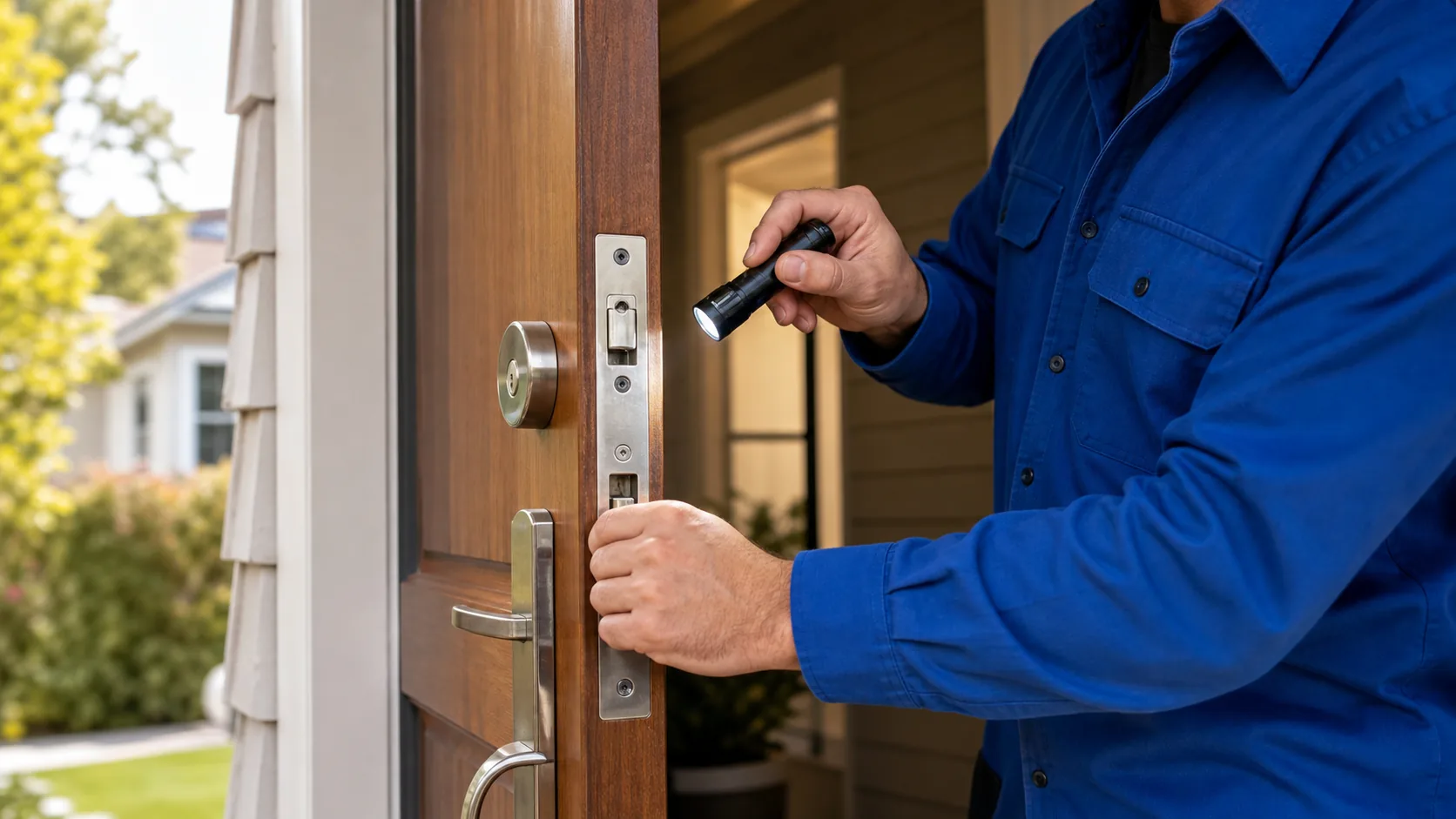
Open the door and observe the hinges, screws, and movement through the full swing. Close it gently and confirm that the latch enters the strike consistently. Look for rub marks, enlarged screw holes, loose strike plates, or gaps that have changed. Do not remove structural or life-safety components merely to inspect them; request professional assessment when damage is substantial or the door cannot secure normally.
Test the latch, deadbolt, and key operation
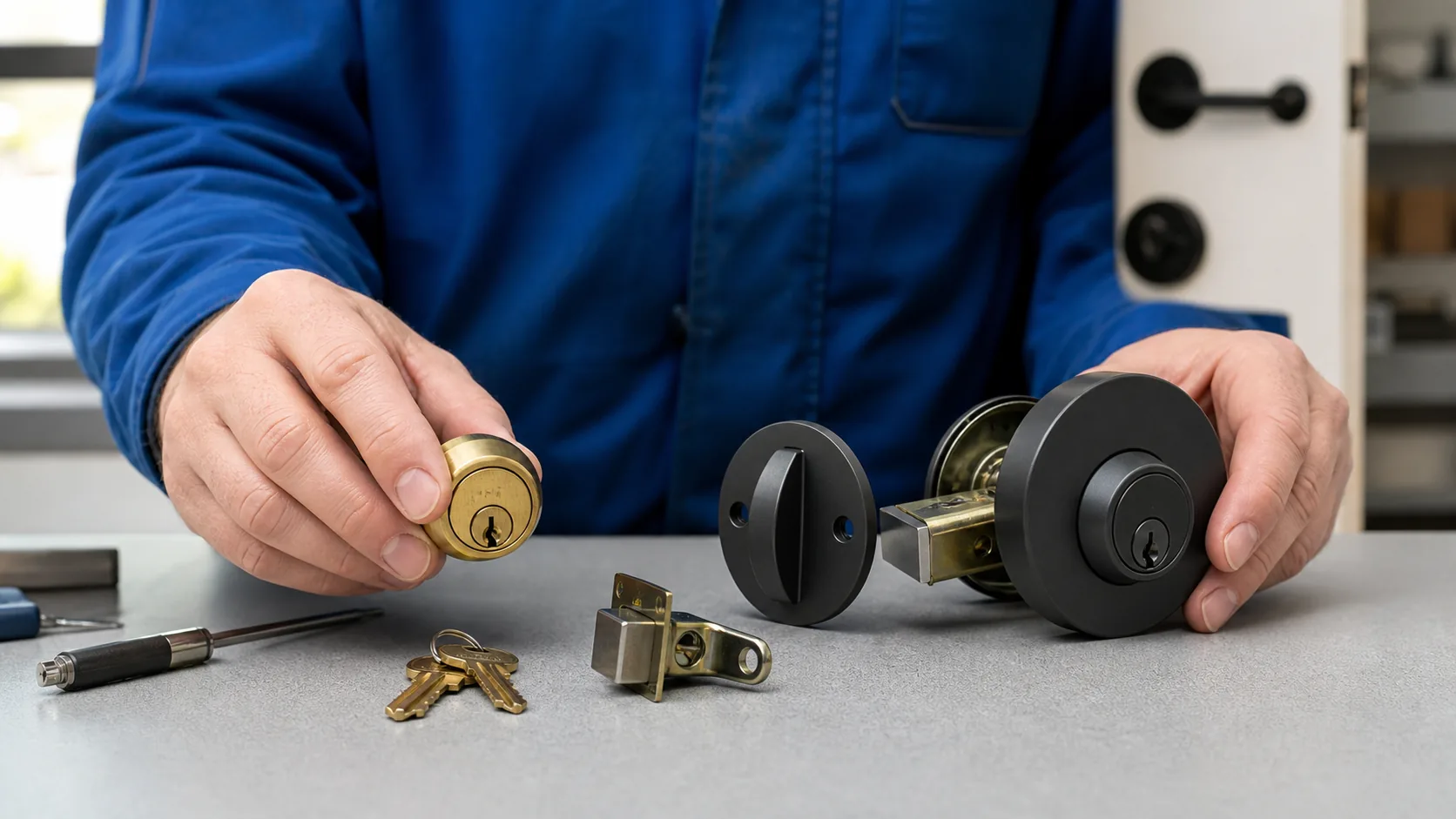
Operate the deadbolt several times with the door open, then closed. It should extend fully without needing to push, pull, or lift the door. Test the latch and inside trim for looseness or delayed return. If operation changes when the door closes, alignment is part of the issue. If the key is rough in both positions, the cylinder or key may be worn.
Check every household key and retire bent, cracked, or unreliable copies. Do not force a key that starts to bind, and use only maintenance products appropriate for the specific hardware. A loose cylinder, spinning trim, drooping lever, or intermittent smart-lock motor should be addressed before it becomes a lockout or leaves the door unable to latch.
Review who can open the door
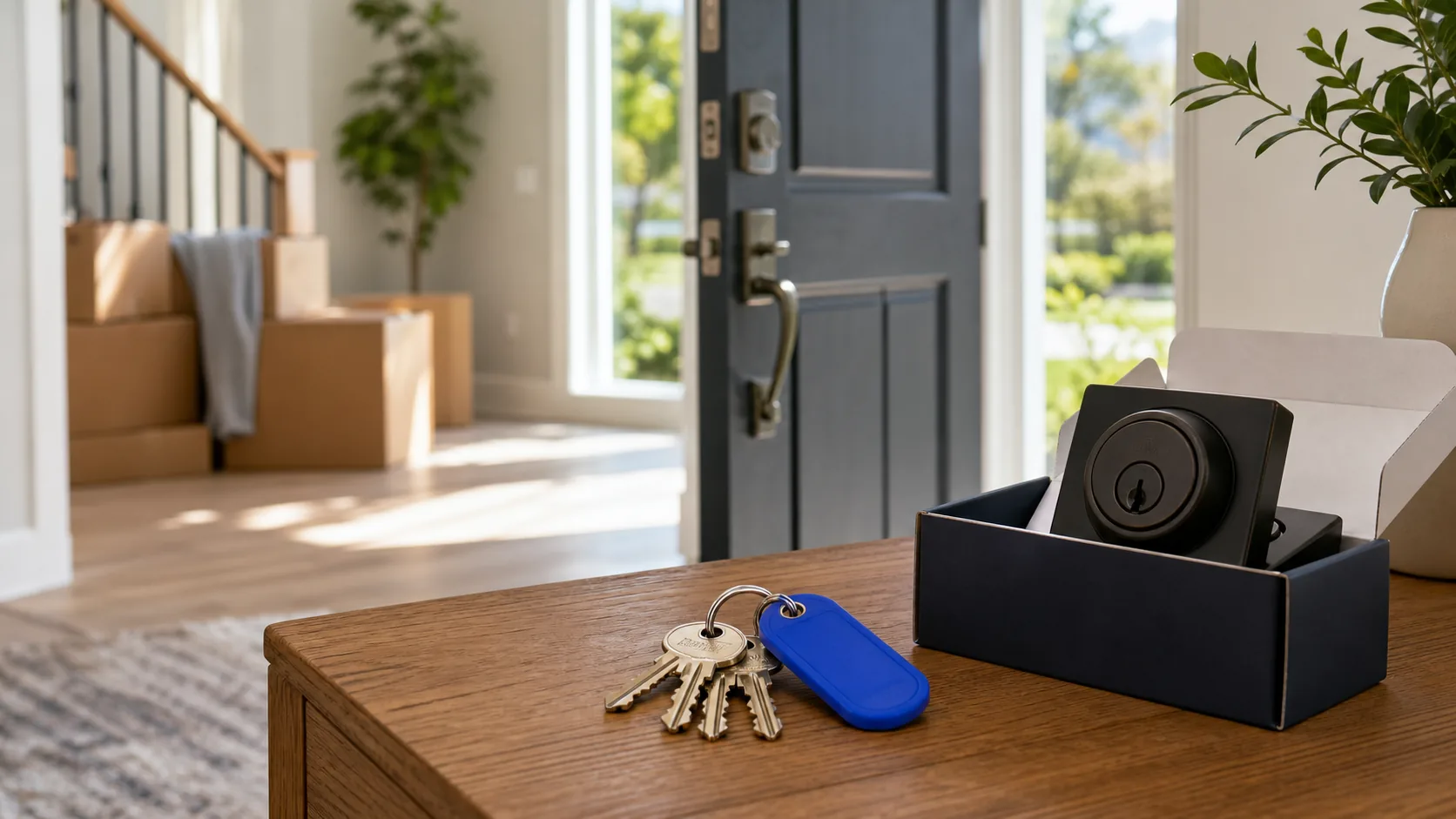
List current physical key holders, including household members, relatives, cleaners, caregivers, dog walkers, contractors, and trusted neighbors. Retrieve keys that are no longer needed. If a key is lost or the history is unclear after a move or occupancy change, consider rekeying compatible locks so old keys no longer work.
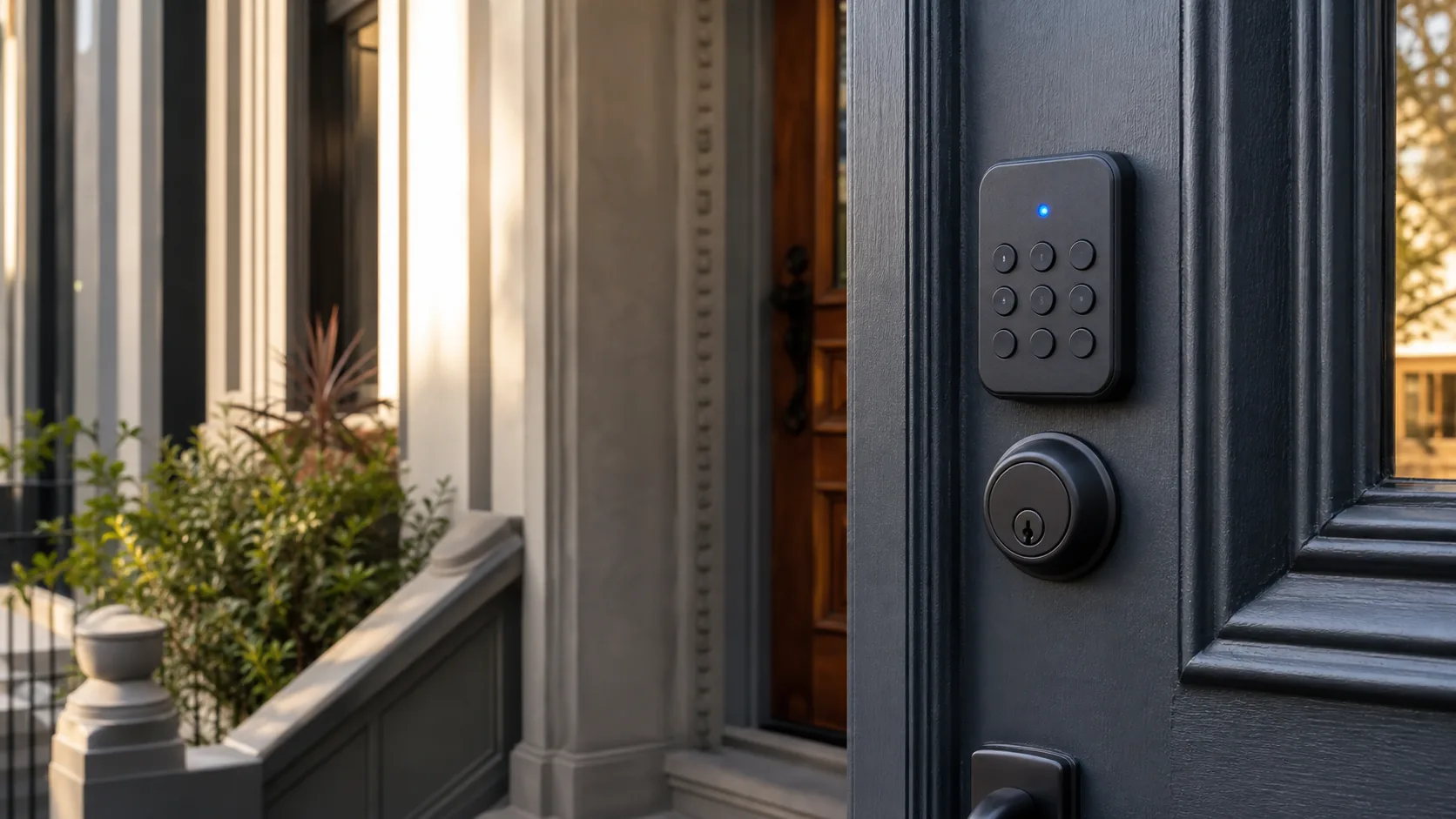
For smart locks, review every user, code, connected account, automation, and recovery method. Use individual codes rather than one permanent code shared broadly, remove temporary access, and protect the owner account with the security options the platform provides. Remember that a smart lock with a mechanical backup cylinder still needs physical key control.
- Current physical key holders and controlled spares
- Smart-lock users, codes, apps, and account owner
- Temporary vendor, guest, or caregiver access
- Missing keys or credentials that were never removed
- A tested backup plan for power, phone, or internet loss
Review visibility and the entry environment
Make sure residents can see the approach and identify a visitor without opening the door. Check that entry lighting works, house numbers are visible to invited responders, and plants or stored items do not block normal movement or hide damage. Position cameras or doorbells, if used, according to property rules and household privacy choices.
Nearby glass, mail slots, sidelights, gates, and shared vestibules can change the security plan and hardware options. Do not add double-keyed or special-release hardware without considering safe exit, accessibility, household members, and applicable building requirements. A locksmith can discuss lock compatibility, while door, glass, electrical, alarm, or code-specific work may require other qualified trades.
Make secure operation easy in daily use
A door that is difficult to close is more likely to be left unlatched or only partly locked. Correct rubbing, closer, weather-seal, or strike problems so the normal secure action is simple. Make sure every resident understands whether the deadbolt must be turned manually, whether a smart lock auto-locks, and how to confirm the door is actually latched before walking away.
Keep emergency and accessibility needs in the plan. Everyone who may need to exit should understand the inside operation without searching for a key or phone. Do not block the door with storage, add an improvised secondary device that prevents ordinary egress, or rely on a connected feature that no one has tested offline.
Turn the checklist into maintenance priorities
Handle immediate functional problems first: a door that will not latch, damaged frame, loose lock, binding deadbolt, lost key with uncertain control, or unreliable exit operation. Then consider convenience and feature upgrades. Separate essential repair, key-control changes, and optional new hardware when requesting an estimate so you can understand the tradeoffs.
Frequently asked questions
How can I tell whether my deadbolt is misaligned?
If it turns smoothly while the door is open but binds, stops short, or needs pressure when the door is closed, the bolt and strike are likely not meeting correctly. Have the opening assessed rather than forcing the key or thumb turn.
Should I replace a working front-door lock after moving in?
Not always. If compatible hardware is in good condition, rekeying may reset old key access. Replacement is appropriate when the lock is damaged, unsuitable, incompatible with the desired key plan, or missing a feature you need.
Does a smart lock make a front door more secure?
It can improve access management and convenience, but results depend on the model, installation, account security, door condition, and household use. It does not compensate for a damaged frame or poorly aligned bolt.
Helpful next steps
Use these pages to compare services or request help for your specific door, lock, or key.