A commercial lock rarely fails in isolation. A sagging door can make the latch scrape, a closer can slam hardware out of alignment, a loose lever can hide worn fasteners, and an unclear key list can leave former users with access. A short inspection routine helps a business find these changes while the door still works and service can be planned around operating hours.
This guide is designed for offices, storefronts, studios, small facilities, and property managers. It is not a fire, accessibility, or building-code inspection. Life-safety and regulated openings should be assessed by appropriately qualified professionals, and exit devices should never be blocked, defeated, or modified as a maintenance shortcut.
Key takeaways
- Inspect the complete opening: door, frame, hinges, closer, latch, strike, and lock.
- Record symptoms early instead of waiting for a full lockout or business interruption.
- Keep an accountable key and credential list tied to roles, not memory.
- Schedule repairs around occupancy and use qualified help for life-safety hardware.
Build a simple door-by-door walkthrough
Create an inventory with a plain identifier for each opening, such as front storefront, rear staff door, suite entry, storage room, or shared gate. Note the lock type, key or credential group, normal business use, and responsible contact. Photos can help track changes, but store access records securely and do not place sensitive keying information in a public maintenance folder.
Walk high-use doors regularly and lower-use openings on a planned schedule. Open and close each door through its normal range. Listen for scraping, grinding, slamming, or delayed latching. Look for loose trim, exposed gaps, damaged weather seals, bent components, and objects interfering with the swing. Confirm that the door closes and latches without someone having to pull or lift it.
Recognize symptoms before they become failures
A key that needs wiggling, a lever that droops, a cylinder that rotates in the door, or a deadbolt that works only when the door is pushed are service signals. Intermittent problems deserve attention because staff often compensate unconsciously until the hardware stops working. Record when the symptom occurs, which key was used, and whether the door was open or closed.
Do not use force, unapproved lubricants, adhesive, or improvised parts to keep a lock operating. Do not tape a latch back or obstruct an exit device. If an exterior door cannot secure, an exit does not operate normally, or a component is separating from the door, control the area and arrange appropriate service rather than relying on a temporary habit.
Pay attention to alignment and door closers
Commercial doors are affected by heavy use, hinge wear, wind, floor changes, frame movement, and closer settings. The latch should meet the strike consistently, and a deadbolt should not need the closer's force to align. Storefront doors can have narrow-stile hardware and concealed components that require specific experience; a residential replacement may not fit or function correctly.
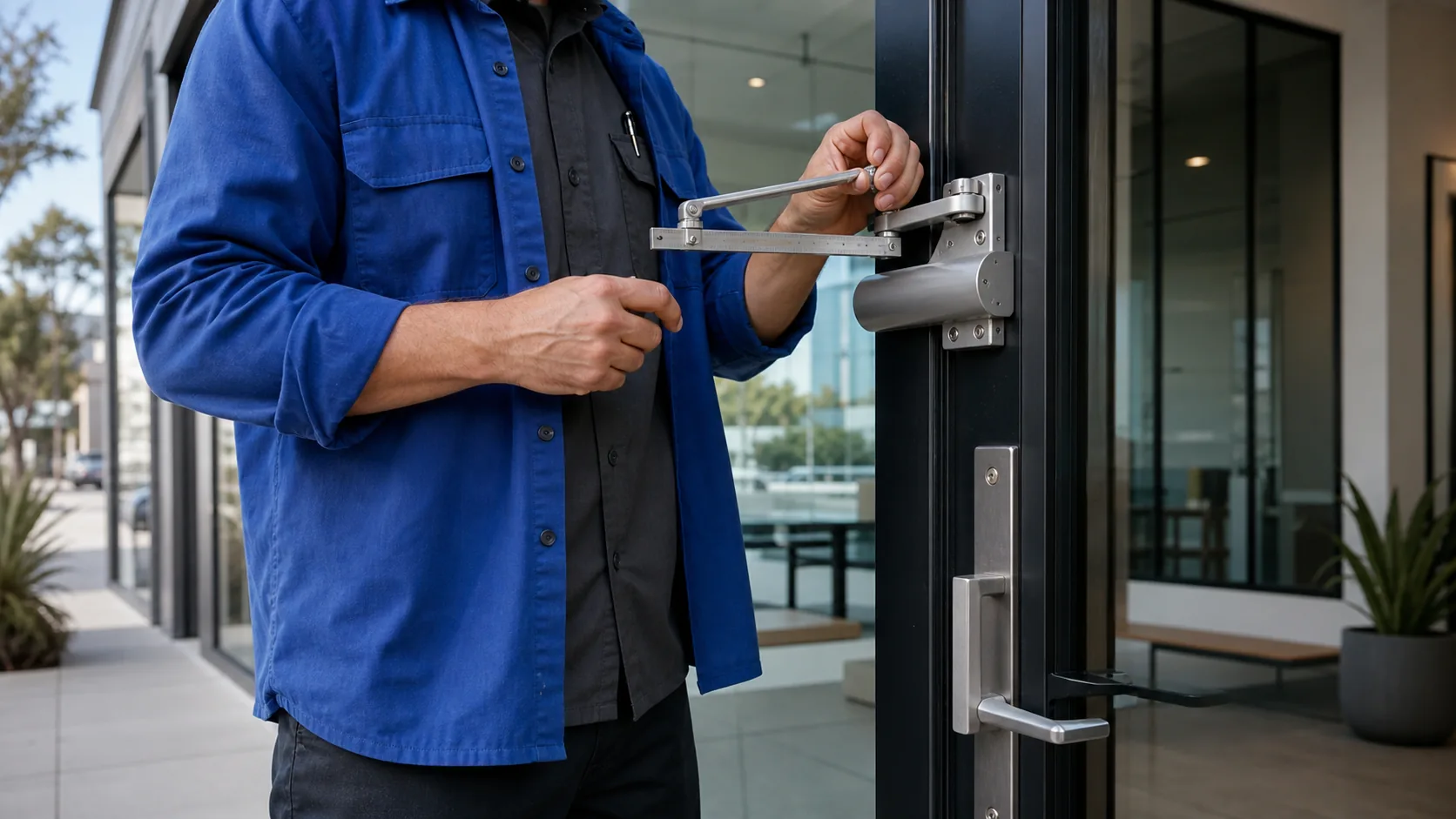
A closer that slams, stalls, leaks, or fails to bring the door to a latched position needs assessment. Closer adjustment can interact with door weight, wind, accessibility, and life-safety requirements, so avoid random valve changes. Document the symptom and let a qualified door professional determine whether adjustment, mounting repair, or replacement is appropriate.
Maintain a usable key and credential record
List which roles need access to each opening and who currently holds keys, cards, codes, or app permissions. Issue identifiers that do not reveal the address if a key is lost. Record returns during staffing or tenant changes and remove digital credentials promptly. A master key can simplify operations, but it also increases the consequence of one missing key and should be planned deliberately.
Rekeying compatible cylinders may restore control after an unreturned or lost key without replacing all working hardware. Larger systems require a clear hierarchy and compatible components. Before work begins, confirm which doors should remain separate, which should be keyed alike, who receives each level of access, and how future additions will be documented.
- Door identifier and normal use
- Lock, closer, and access-control hardware type
- Approved key or credential groups
- Current holders, issue dates, and returns
- Observed defects and completed service history
Plan service around business operations
Group non-urgent work into a documented visit when practical. Send door photos, inventory counts, symptoms, business hours, loading instructions, and access restrictions in advance. Decide who can approve additional parts if inspection reveals hidden damage. For a multi-tenant property, distinguish tenant hardware from base-building or shared hardware before authorizing changes.
After service, test each opening under normal conditions and update the records. Confirm that keys operate only the intended doors, latches hold, doors release normally, and any new hardware matches the approved scope. Retain model and part information for future maintenance. A brief handoff with the staff who use the door can prevent workarounds from returning.
Set a maintenance rhythm that fits the site
There is no universal inspection interval for every business. High-traffic entrances, exposed gates, delivery doors, and doors that staff already report may need closer attention than low-use interior rooms. Use observed wear, manufacturer guidance, occupancy, and the importance of the opening to set a schedule instead of waiting for an annual calendar reminder alone.
Frequently asked questions
How often should a business inspect doors and locks?
Base the schedule on traffic, exposure, manufacturer guidance, past problems, and the opening's importance. High-use exterior doors should be observed more often than rarely used interior doors, and any new symptom should be reported promptly.
Should staff lubricate a sticking commercial lock?
Not without knowing the hardware and approved product. Sticking may come from alignment, wear, contamination, or internal damage, and the wrong lubricant can collect debris. Record the symptom and arrange assessment when basic key comparison does not resolve it.
When should commercial locks be rekeyed?
Consider rekeying compatible hardware after a lost or unreturned key, tenant or staffing change, or unclear key history. First inventory which openings and access groups are affected so the change does not disrupt authorized users.
Helpful next steps
Use these pages to compare services or request help for your specific door, lock, or key.