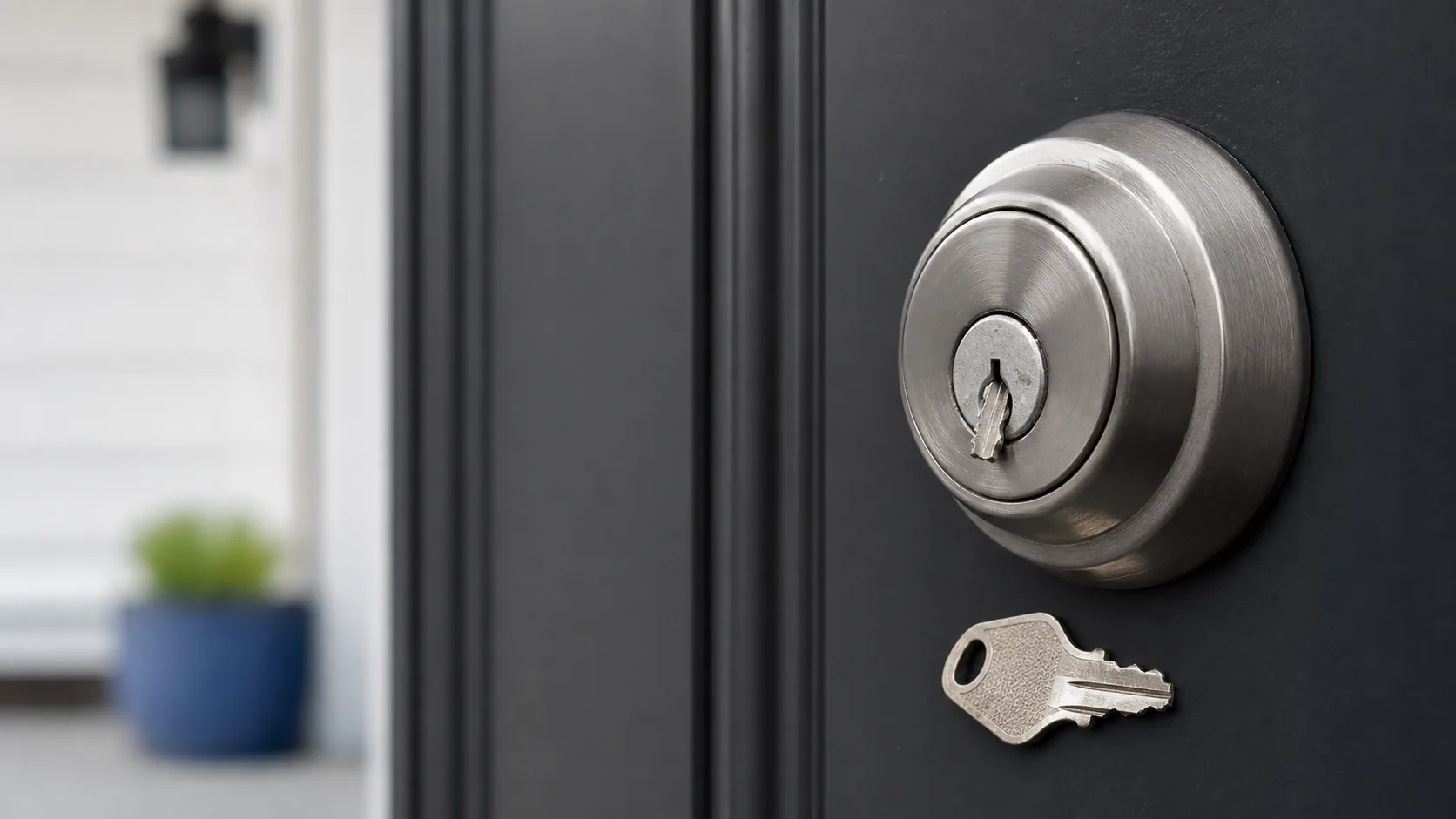
A key often breaks after giving warnings: bending, sticking, needing extra pressure, or working only when the door is pushed into position. Once part of the key is inside the lock, the priority is to stop adding damage. Turning the remaining fragment, packing the keyway with glue, or inserting sharp improvised tools can push the piece deeper and harm the cylinder.
The right response depends on whether the door is open or closed, whether another authorized entrance is available, how much of the key is visible, and whether the lock was already malfunctioning. This guide explains safe preparation and repair decisions without providing lock-bypass or extraction instructions.
Key takeaways
- Stop turning the key or lock as soon as the key cracks or breaks.
- Do not add glue, household tools, lubricant, or another key to the keyway.
- Keep every recovered piece and describe the lock's earlier symptoms.
- After removal, address the key, cylinder, and door condition that caused the failure.
Stop and stabilize the situation
Release pressure immediately. Do not continue rotating the key head, thumb turn, or handle in an attempt to move the broken piece. Keep the door in its current safe position. If it is open, avoid letting it slam or latch closed; if it is closed, do not pry the door or strike. Prevent other people from trying the same lock while you arrange help.
Move out of traffic and weather when possible, and identify any urgent safety concern. If a person, pet, fire, active appliance, or medical need is creating an immediate hazard, contact emergency services. For a routine lock problem, check only authorized alternative access, such as a household member, property manager, or trusted spare-key holder.
Avoid common actions that make removal harder
Do not use glue on the visible fragment or another key. Adhesive can bond internal components and turn an extraction into a cylinder replacement. Do not insert tweezers, knives, pins, magnets, wires, or drill bits into the keyway. They can push the fragment beyond reach, deform internal parts, snap off themselves, or cause injury.
Do not spray a random lubricant or cleaner into the lock. Products differ, and excess material may carry debris deeper or interfere with diagnosis. Do not strike the cylinder or dismantle door hardware when you are locked out or lack property authorization. Leave the fragment in place, protect the area from additional attempts, and give a professional an accurate description.
Collect useful information for the service call
Save the portion of the key in your hand and any piece that fell free. Do not tape fragments together or insert them back into the lock. Photograph both sides of the retained piece and the lock face. Note whether any fragment is visible, but do not manipulate it for the photo. Identify the door, lock type if known, and whether the door is currently open or secured.
Describe what happened just before the break. Was the key already bent or cracked? Did it turn partway? Did the deadbolt bind when the door was closed? Did the lock work smoothly with another key? Was the key a worn copy? These details help distinguish a key problem from cylinder wear, contamination, door alignment, or a failed lock mechanism.
- Exact location and whether the door is open or closed
- Photos of the lock and retained key piece
- How far the key turned before it broke
- Previous sticking, grinding, looseness, or alignment issues
- Whether another working key exists for later testing
Call for the right kind of help
For a home or business door, contact the owner, manager, or a locksmith as appropriate. Explain whether access is urgent, what proof of authorization you have, and whether shared or rented hardware is involved. For a vehicle, provide year, make, model, key type, location, and whether another working key exists; automotive key systems require different equipment and may fall outside a provider's scope.
Fix the cause, not just the fragment
After the piece is removed, inspect the full opening. A lock that operates smoothly while the door is open but binds when closed may have an alignment problem. A key that sticks in multiple positions or a cylinder that feels rough may point to wear or internal damage. A cracked or heavily worn key should not be copied as the model for a new spare when a better original or correct key information is available.
Ask whether the cylinder can be repaired or rekeyed and whether the door, strike, or hinges need adjustment. If the key was lost or broken away from your control, discuss whether old key access should be reset. Test the completed lock and every supplied key with the door open and closed before service ends.
Prevent another key failure
Retire keys that are bent, cracked, deeply worn, or difficult to distinguish from a reliable original. Keep keys free from heavy attachments that twist in the cylinder, and avoid using a key as a package opener or tool. Make a tested spare before the last good key is lost, and store it securely away from the address.
Frequently asked questions
Can a broken key always be removed without replacing the lock?
No. Many fragments can be removed, but the result depends on fragment position, cylinder condition, prior attempts, and whether the lock failed internally. The technician should inspect and explain any repair or replacement need.
Should I put glue on the broken piece to pull it out?
No. Glue can spread into the cylinder and bond internal parts, making the problem worse. Leave the keyway clear and describe how much of the fragment is visible when you request service.
Why did the key break only when the door was closed?
The bolt or latch may have been binding against the strike because of alignment, door movement, or pressure. The lock and complete door opening should be tested after the fragment is removed.
Helpful next steps
Use these pages to compare services or request help for your specific door, lock, or key.