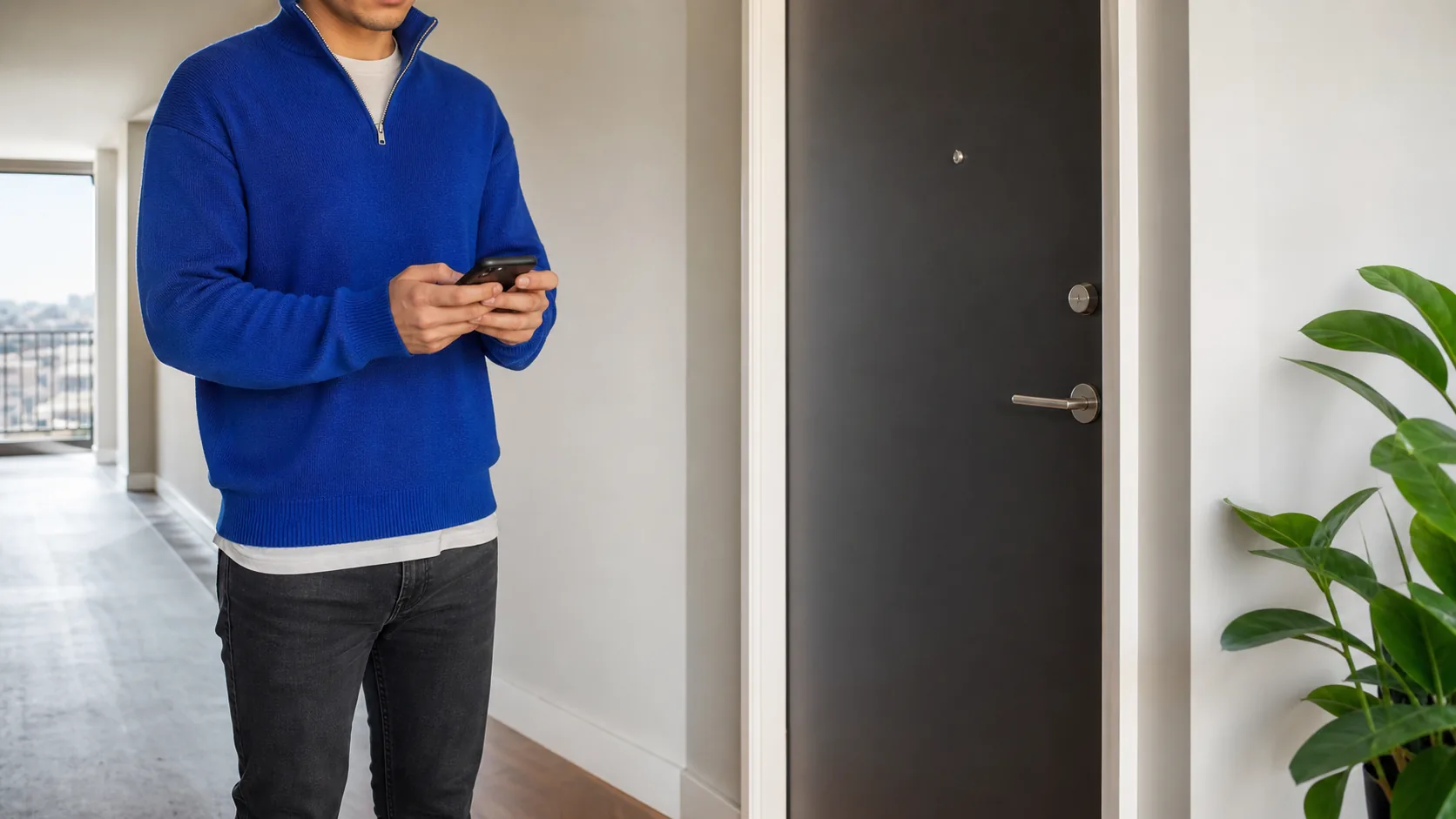
An apartment lockout can involve more than one door. You may be outside the building, through the lobby but outside the unit, unable to open a shared gate, or dealing with a key that works in one lock but not another. Identifying the exact access point helps you contact the right person and avoid paying for work the building already handles.
Renters should balance urgency with property authorization. A lease, manager, front desk, building engineer, or after-hours contact may define how lockouts are handled and who may approve changes to the hardware. The steps below are general practical guidance; your building's agreement and current instructions control its process.
Key takeaways
- Identify whether the lockout is at a shared entrance or your private unit.
- Contact the building's stated lockout resource before changing shared hardware.
- Prepare proof that connects you to the apartment and explain if it is inside.
- Do not force the door, climb the building, or attempt an improvised entry.
Start with safety and urgency
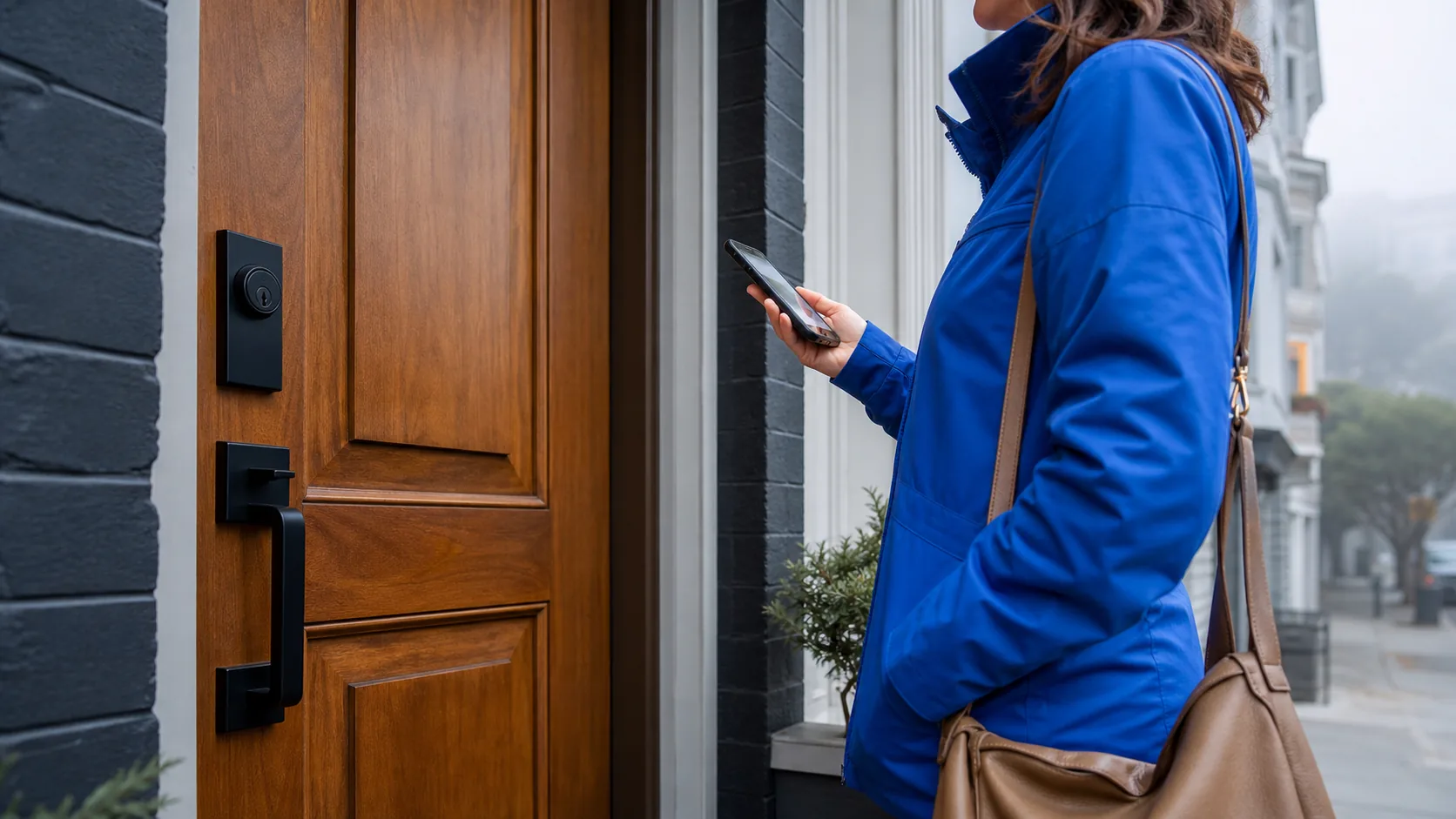
Move to a safe, visible location where you can make calls and meet an authorized responder. In a dense neighborhood, do not wait in a traffic lane, loading zone, dark garage, or unprotected vestibule. Preserve your phone battery by sending your location to a trusted contact and having a charger brought if the wait may be extended.
If a child, vulnerable person, pet, fire, active appliance, medical need, or other immediate danger is inside, contact emergency services. Explain the risk precisely. A routine apartment lockout is a locksmith or building-management problem; an imminent threat to people or property requires an emergency response.
Identify the locked door and responsible contact
Determine whether you need access through a building gate, common lobby, elevator control, garage, or the door to your unit. Shared entrances may be controlled by management, security, a call box, an access-control vendor, or another resident procedure. A locksmith should not alter common-area hardware without proper authorization.
Check the building's resident portal, lease materials, posted management number, front desk, or established after-hours contact. A roommate or authorized neighbor may have a spare. If the key was lost with identification or anything showing the address, tell the manager; restoring entry may not be enough if the missing key still operates the unit.
Prepare to verify that you live there
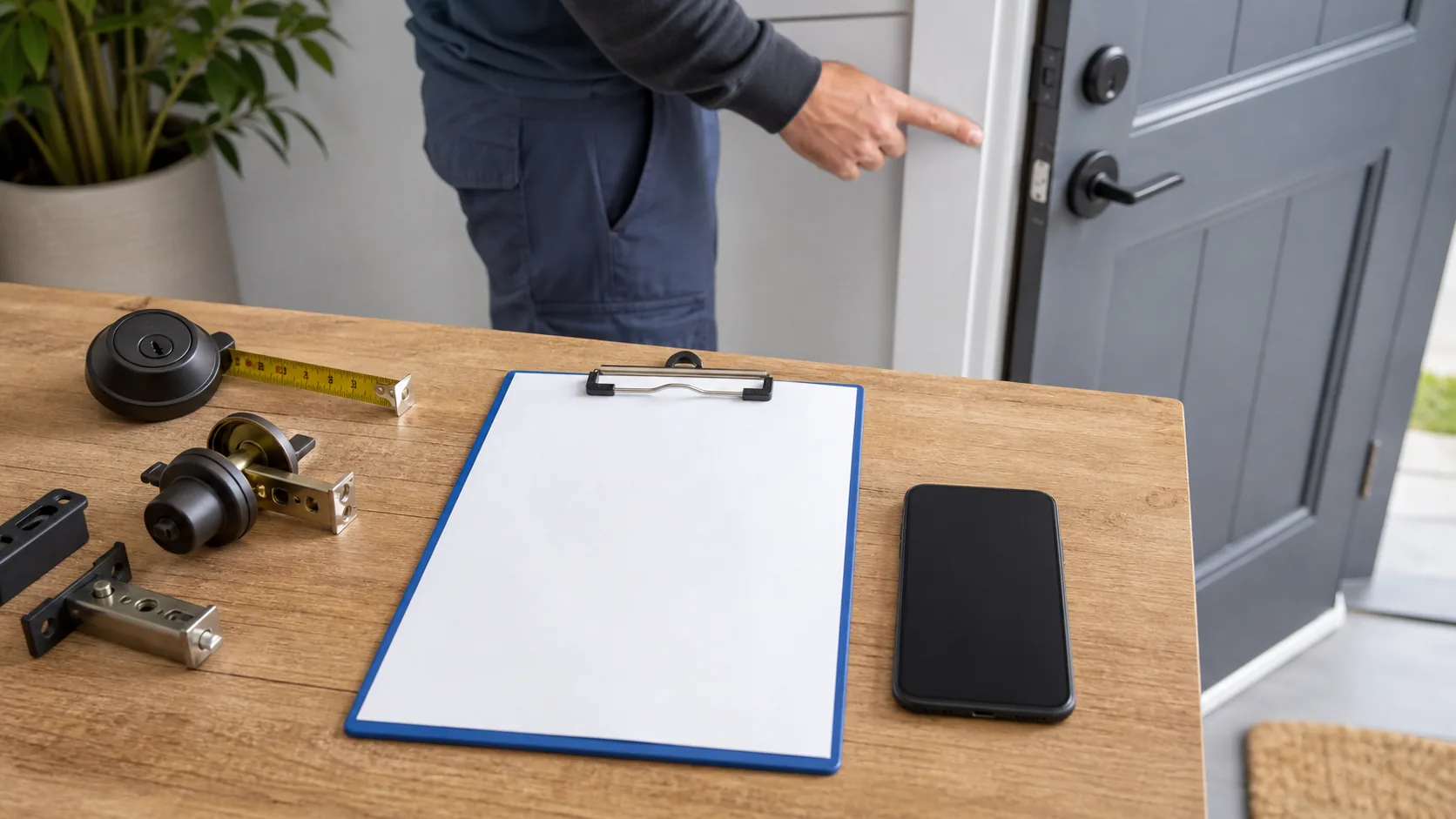
A locksmith should confirm that you are authorized to enter. Useful documentation may include identification showing the address, a lease, a utility account, current mail, a resident portal, or direct confirmation from the owner or manager. Ask what will be accepted before the visit so everyone knows the verification plan.
If your wallet and documents are inside, say so. You may be able to show a digital lease or account, contact a co-tenant, or arrange manager confirmation. Do not ask a technician to skip verification because the situation feels urgent. That safeguard protects residents from unauthorized entry.
- Photo identification when available
- Lease, resident portal, utility record, or current mail
- Property-manager or authorized co-tenant confirmation
- Unit number and a reliable callback number
Give a locksmith a clear description
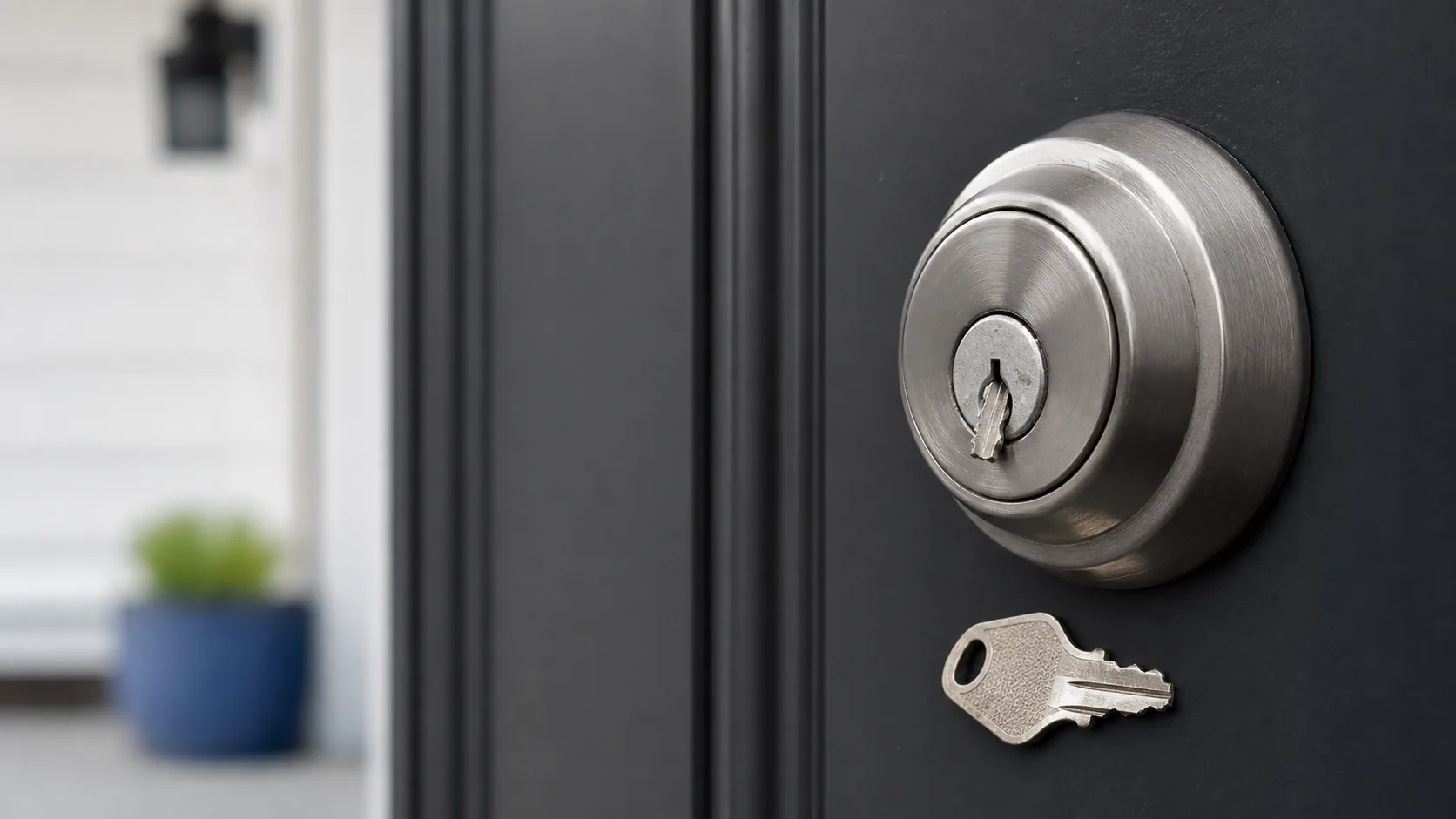
Share the building address, unit, exact door, and whether you are locked out at a common entry or private unit. Describe the visible hardware and what happened: key left inside, missing key, key that turns without opening, deadbolt problem, electronic lock alert, or a broken key. Mention any known building restriction or manager approval requirement.
Ask about availability, estimate structure, identification, and what happens if the lock is damaged or cannot be opened as expected. A technician should inspect the opening and explain the proposed scope before proceeding. Do not pry, drill, dismantle, add glue, or insert improvised tools while waiting; those attempts can complicate a controlled opening and damage property you do not own.
Close the loop after you get inside
Test the door, latch, deadbolt, and key while the technician or building representative is present. If hardware was changed, confirm that management approved it and receives any required key or access information. Keep the invoice and tell the property contact what was done, especially if the lock showed a mechanical fault rather than a simple missing key.
For a lost key, ask whether rekeying the compatible unit lock is appropriate. For a recurring sticky lock, request repair rather than waiting for another lockout. Build a safe backup plan: a trusted person with an authorized spare, a documented management process, or an approved keypad arrangement. Never label a hidden spare with the apartment address or leave it in an obvious common-area location.
Frequently asked questions
Should I call my landlord or a locksmith first?
Check the building's stated lockout process first when it is available, especially for shared entrances or managed hardware. If you cannot reach the contact or are directed to arrange service, call a locksmith and explain the authorization situation.
Can a locksmith replace my apartment lock without the manager?
That depends on authorization and the building's requirements. A lockout may not require replacement at all. Confirm permission before changing rental or shared hardware and keep management informed about any completed work.
What if my identification is locked inside?
Tell the locksmith during the call. Prepare another way to connect yourself to the unit, such as a digital lease, resident account, utility record, co-tenant, or property-manager confirmation.
Helpful next steps
Use these pages to compare services or request help for your specific door, lock, or key.